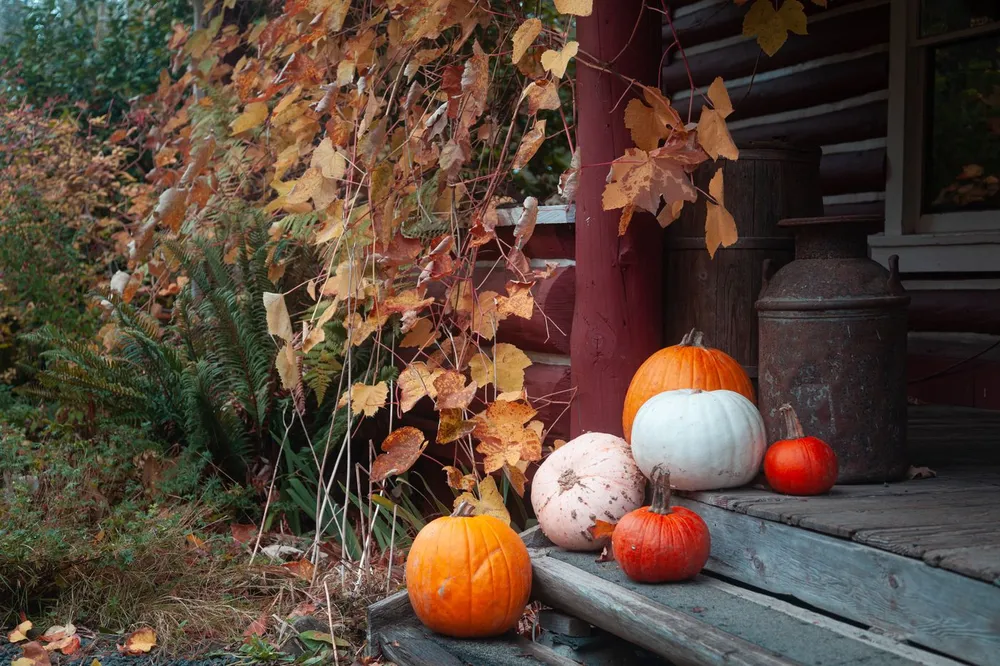
A hollowed pumpkin filled with mums, trailing ivy, and a few pansies can turn an ordinary front step into the warmest spot on the street. These pumpkin planter ideas for a festive fall porch work because they combine something you already love about autumn, the pumpkin itself, with living plants that add color, texture, and height. You do not need a big porch, a big budget, or advanced gardening skills. You need one good pumpkin, a sharp knife, a small pot or a plastic liner, and plants that can handle cool October air.
In this guide you will find 15 ideas, from a single classic mum pumpkin by the door to a full display with stacked pumpkins and kale. Each idea includes the plants and pumpkin sizes that actually work. If you are decorating for Thanksgiving as well, see our guide to Thanksgiving porch planter ideas for a welcoming entrance.
1. The Classic Mum Pumpkin
Start with the idea everyone recognizes, and for good reason. Hollow a medium carving pumpkin, about 10 to 12 inches across, and drop in a 6 inch pot of bronze or rust colored mums. The round pumpkin and the round mum head echo each other, and the color contrast does the rest. Set one on each side of the door for instant symmetry. Water sparingly, just enough to keep the soil damp, and the display should last two to three weeks in cool weather.
2. White Pumpkin with Purple Pansies
White pumpkins, such as Lumina or Casper, look softer than orange ones, and they make purple pansies pop. Choose a wide, flat pumpkin so the pansies spill over the edge. Pansies handle light frost well.
3. Mini Pumpkin Trio on the Steps
Small porches love small pumpkins. Hollow three mini pumpkins, each 4 to 6 inches across, and plant one succulent or one small pansy in each. Line them up on a single step, or group them in a shallow wooden tray. Because minis dry out faster, check the soil every two days and water with a small cup rather than a hose. This is also a lovely project to do with children.
4. Tall Stacked Pumpkin Planter
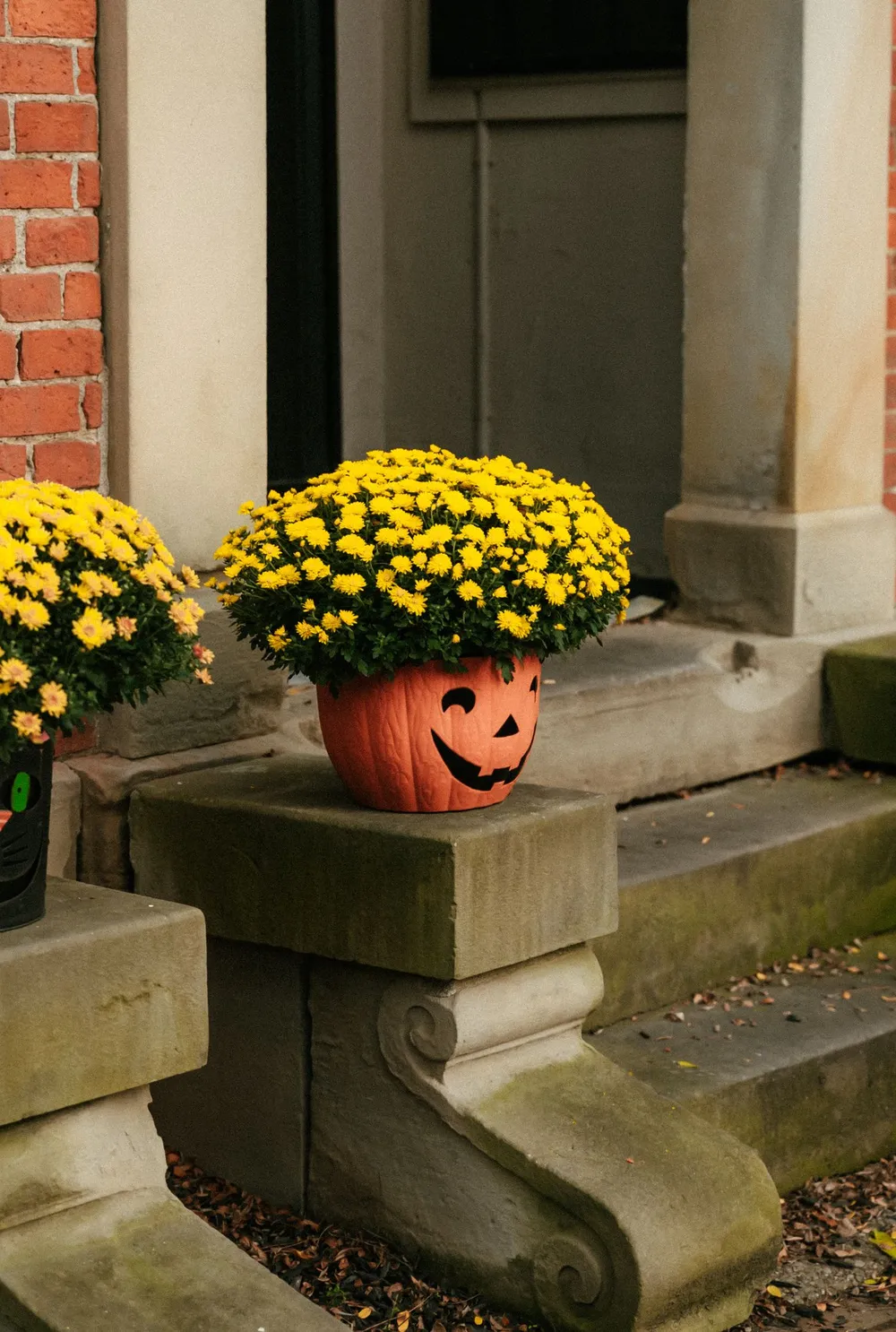
For height without a trellis, stack two pumpkins: a large one as the base and a smaller one on top as the planter, secured with a wooden dowel through the center. Plant the top pumpkin with trailing ivy and yellow mums so greenery cascades over the lower pumpkin. Keep the stack close to a wall so wind cannot topple it.
5. Pumpkin Planter with Ornamental Kale and Cabbage
Ornamental kale and cabbage are the workhorses of fall containers. Their ruffled leaves in purple, cream, and green look good for weeks, and they actually improve in color after a light frost. Plant one kale in the center of a wide pumpkin and ring it with small white pansies. This combination lasts longer than mums alone, often into November.

6. Succulent Pumpkin Centerpiece for a Covered Porch
On a covered porch, where rain cannot soak the pumpkin, try succulents. Hollow a pumpkin, add cactus mix, and arrange echeveria, sedum, and trailing string of pearls. Succulents need very little water, so the pumpkin stays firm longer, and the planter can move indoors to a table for Thanksgiving.
7. Pumpkin Planter Ideas for a Festive Fall Porch in Harvest Colors
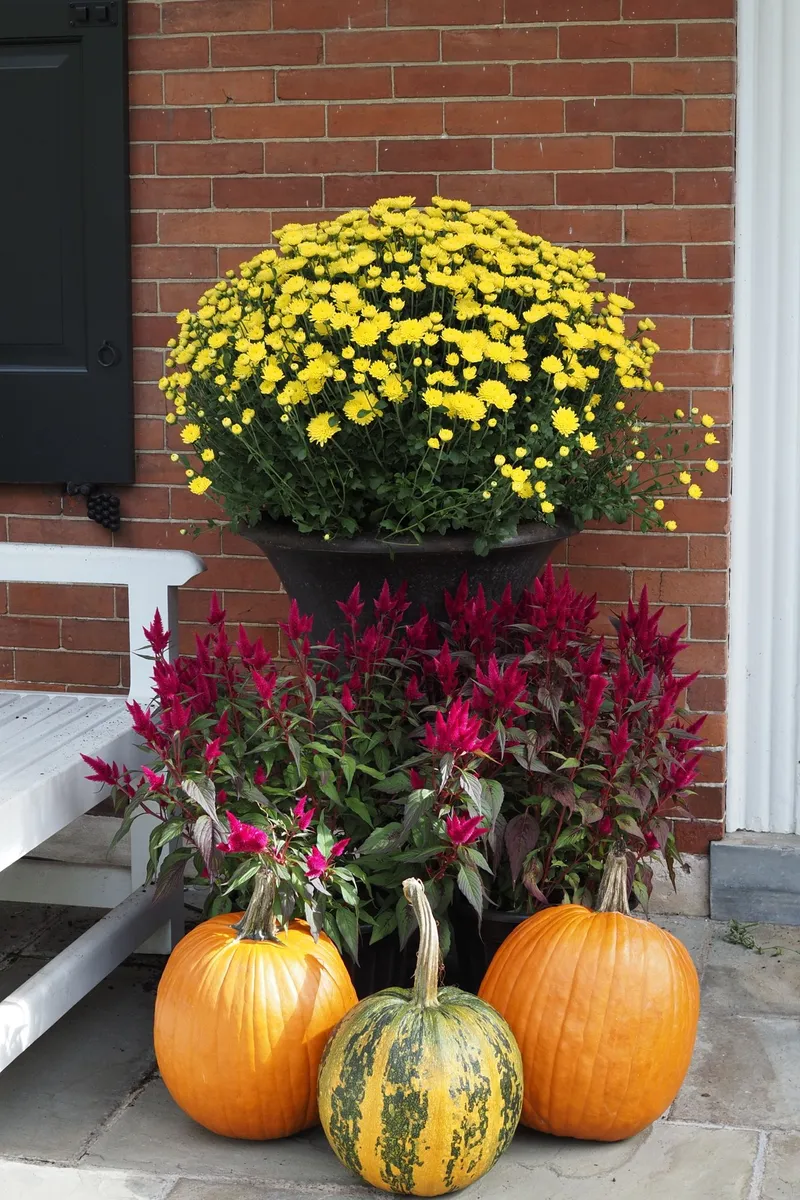
Go all in on harvest color with a mix of orange mums, yellow marigolds, and deep red celosia in one large pumpkin. The trick is to keep the tallest plant, the celosia, in the center and the shorter mums around it, so the arrangement reads as one full bouquet rather than a jumble. Place it where it catches afternoon light, and the colors will glow against a dark door.

8. Blue and White Pumpkin with Ivy
Jarrahdale pumpkins, with their dusty blue gray skin, look striking with simple green ivy and white violas. This cooler palette suits gray, white, or blue painted doors better than bright orange does. Add a white candle lantern beside it for evening glow. If you like this softer porch style, you will also enjoy our mums and pumpkins porch decor ideas for more muted combinations.
9. Pumpkin Wheelbarrow or Crate Planter Display
Set your pumpkin planter inside an old wooden crate or small wheelbarrow, then surround it with uncarved pumpkins, gourds, and a bale of straw. The crate raises the planter to eye level. Fill gaps with pinecones and dried corn stalks for a full porch display from a single planter.

10. Hanging Basket Style Pumpkin with Trailing Plants
You cannot hang a heavy pumpkin, but you can fake the look. Set the planter on a tall plant stand, then plant it with creeping Jenny, ivy, and trailing lobelia. As the vines grow down, they hide the stand and create a waterfall effect beside porch railings.
11. Herb Pumpkin for the Kitchen Porch
A pumpkin planter does not have to be only decorative. Plant a medium pumpkin with rosemary, thyme, and sage, and keep it by the kitchen door. The herbs survive cool fall weather, smell wonderful when you brush past them, and you can snip sprigs for roasts and soups through October. Use a plastic liner inside the pumpkin so watering does not soften the shell too fast.

12. Pumpkin Planter with Fairy Lights
Wrap a short string of battery fairy lights around the base of the pumpkin planter and tuck a few lights among the plants, keeping the battery pack hidden behind the pumpkin. At dusk the lights make mums and kale glow without any carving or candles. Choose warm white lights, not multicolor, for a cozy rather than festive carnival look.
13. Two Tone Pumpkin Pair by the Door
Pair one orange pumpkin planter with one white one, planting both with the same flowers, for example yellow mums. The matching plants tie the pair together while the contrasting pumpkins keep it interesting. Flank the front door with them and add a simple coir doormat in between.

14. Pumpkin Planter with Dried Grasses and Wheat
For a rustic porch, plant a pumpkin with short mums, then push dried wheat stems, bunny tail grass, and dried corn stalks into the soil around the edges. The grasses balance the wide pumpkin, nothing here needs much water, and the dried elements keep the planter looking finished even if the mums fade early.
15. Thanksgiving Ready Pumpkin Planter
Plan one planter specifically for Thanksgiving week. Choose a large, firm pumpkin in mid November, plant it with fresh mums and a few sprigs of evergreen, and add three small gourds around its base. Evergreen sprigs stay green when mums tire, so the planter still looks fresh when guests arrive. For more styling, see our hay bale fall porch decor ideas.

How to Hollow a Pumpkin, Add Drainage, and Keep It from Rotting
Cut the top off with a serrated knife, angling the cut slightly inward so the lid sits back neatly. Scoop out seeds and strings with a large spoon, then scrape the inside wall until it is about 1 inch thick. A thick wall holds moisture and rots faster, so do not skip this step.
For drainage, you have two good options. The simplest is to drop a potted plant, still in its nursery pot, directly into the pumpkin, with a small saucer or a folded plastic bag underneath to catch drips. The second option is to drill three or four small holes in the bottom of the pumpkin and set it on a saucer. Either way, water lightly and never let the plant sit in standing water.
To slow rotting, keep the planter out of direct rain and bring it under cover during heavy storms. A thin coat of petroleum jelly on the cut edges can help seal them. When the bottom softens, compost the pumpkin and move the plants to a regular pot: the plants usually outlive the pumpkin.
Pumpkin Planters for a Small Porch or Apartment Balcony
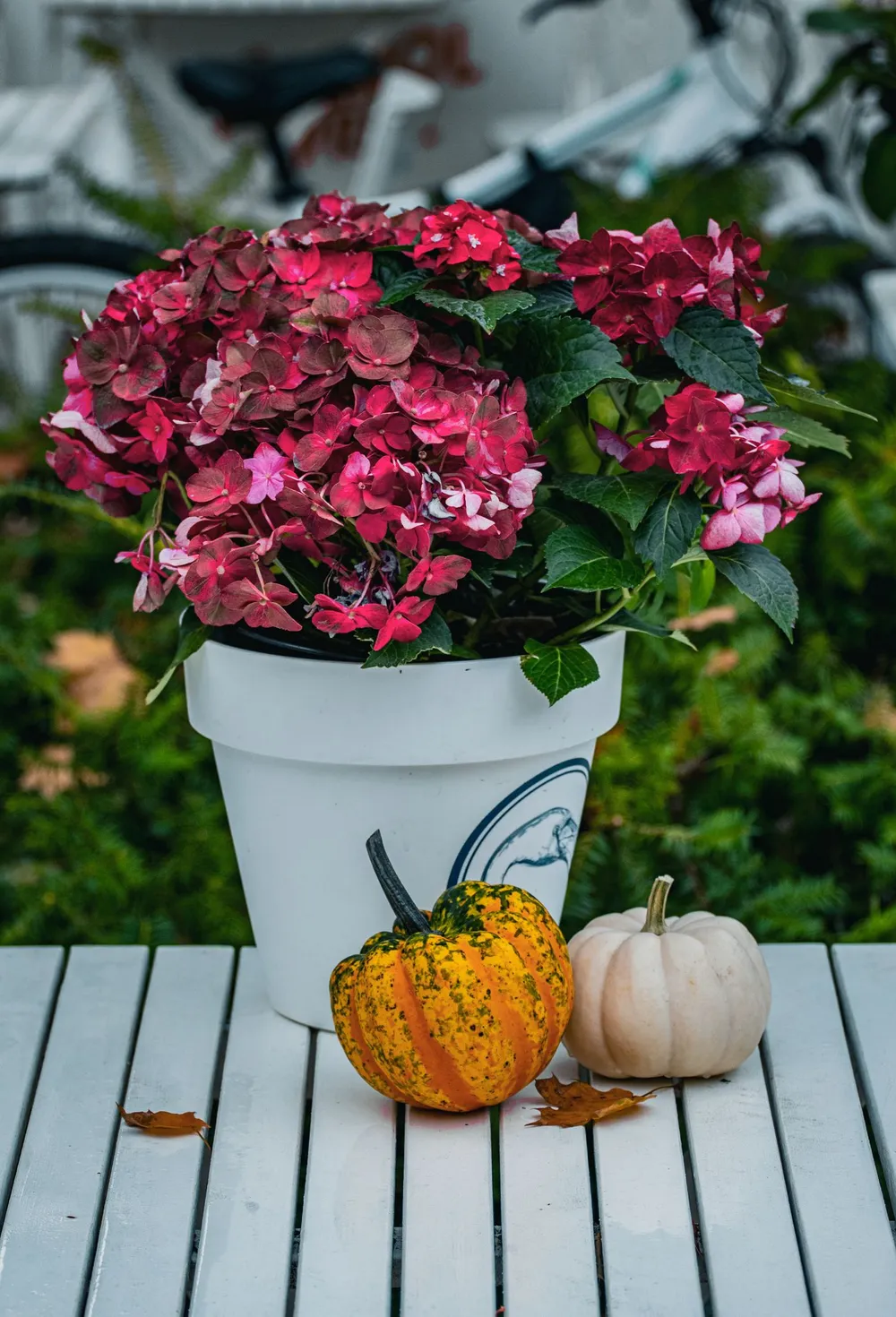
A small porch needs one strong focal point, not five small ones. Choose a single medium pumpkin planter in a color that contrasts with your door, placed on the door handle side where guests naturally look. Skip hay bales and extra gourds, and add height with one tall dried grass stem or a small lantern. If your porch gets less than three hours of sun, choose ivy, pansies, and ornamental cabbage over sun hungry mums. A pumpkin wider than 14 inches will crowd a narrow step, so measure first.
Frequently Asked Questions
How long does a pumpkin planter last?
In cool fall weather, most pumpkin planters last 2 to 4 weeks. Covered porches, light watering, and a potted plant inside a liner, rather than soil planted directly in the pumpkin, all extend its life. Discard the pumpkin when the bottom turns soft, and replant the flowers in a regular pot.
What plants grow best in a pumpkin planter?
Mums, pansies, violas, ornamental kale and cabbage, ivy, and succulents all work well. Mums give instant color, pansies handle frost, kale lasts longest, and succulents suit covered porches. Avoid plants that need daily heavy watering, since wet soil rots the pumpkin quickly.
Do I need drainage holes in a pumpkin planter?
Yes, in some form. Either drill small holes in the bottom and use a saucer, or keep the plant in its nursery pot inside the pumpkin with a drip catcher underneath. Without drainage, water pools inside and the pumpkin softens within days.

Can I use a fake pumpkin as a planter?
Yes, and it is a smart choice if you want the display to last all season. Cut an opening in a foam or plastic pumpkin, insert a pot, and plant as usual. Fake pumpkins also let you reuse the same planter next year. Real pumpkins look more natural up close, so choose real for a front door display and fake for high, hard to reach spots.
When should I make pumpkin planters?
Make them in early to mid October for Halloween and fall displays, and refresh with a new pumpkin in mid November for Thanksgiving. Pumpkins made too early, in warm September weather, rot faster. Buy firm pumpkins with no soft spots and a sturdy stem, and store them in a cool, dry spot until you are ready to hollow them.

Conclusion
The best pumpkin planter is the one you will enjoy walking past every day. Start with one classic mum pumpkin, learn how it holds up on your porch, and add a second idea next weekend. A real pumpkin with living plants gives your porch a warmth that store bought decorations rarely match. Pick your pumpkin this week, plant it this weekend, and enjoy a festive fall porch all the way to Thanksgiving.