A bare fence or a flat wall can make a whole garden feel unfinished. Pots get rearranged, mulch gets refreshed, and something still looks missing. Nine times out of ten, the missing piece is height. That is exactly what clematis trellis ideas for a pretty climbing garden give you: flowers where your garden is currently flat, at eye level and above, for weeks or months at a time.
One plant can throw hundreds of blooms in a season, but the support is the part people get wrong. Pick the wrong trellis and the plant sulks or slides back down. Get it right and the garden changes completely.
Before You Build: How Clematis Actually Climbs
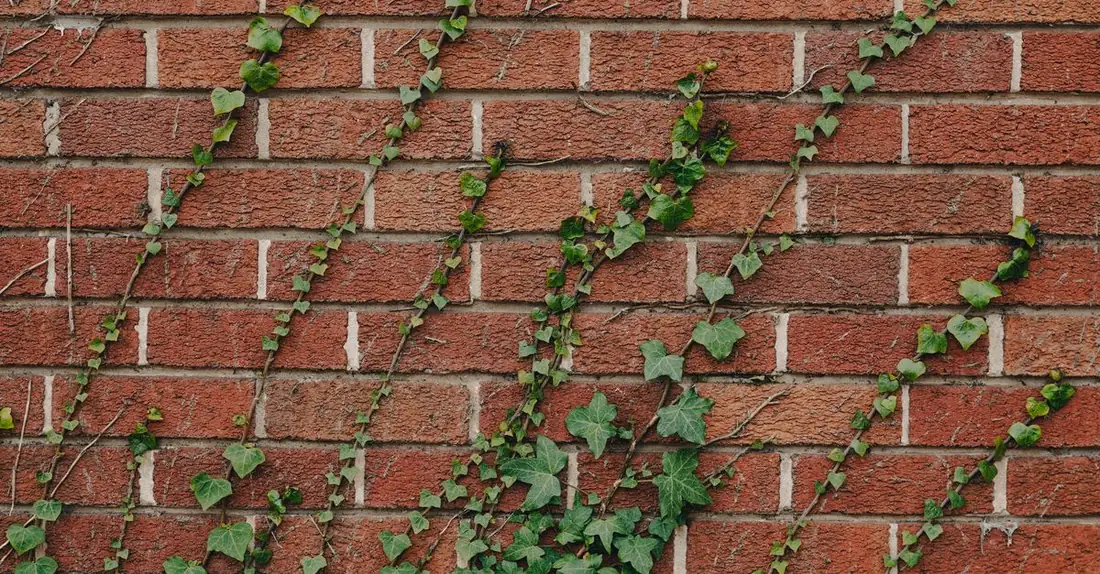
Clematis does not cling to brick or suction onto walls the way ivy does. It climbs by wrapping its leaf stems around slim supports. This one fact decides whether your trellis works. Supports thicker than about three quarters of an inch are nearly impossible for young stems to grip.
Hold the trellis four to six inches off a wall or fence so air moves behind the plant. A clematis pressed flat against a damp fence is far more likely to develop clematis wilt, the fungal disease that can blacken a stem overnight in warm, wet weather. And expect the sleep, creep, leap rhythm: year one builds roots, year two creeps, year three leaps. Size your trellis for year three and you will never replace it.
15 Clematis Trellis Ideas for a Pretty Climbing Garden
Fifteen ideas that actually work, with the detail that saves you from buying the wrong thing twice. Start with the spot, then match the support to the plant.
1. Slim Fan Trellis Against a Fence
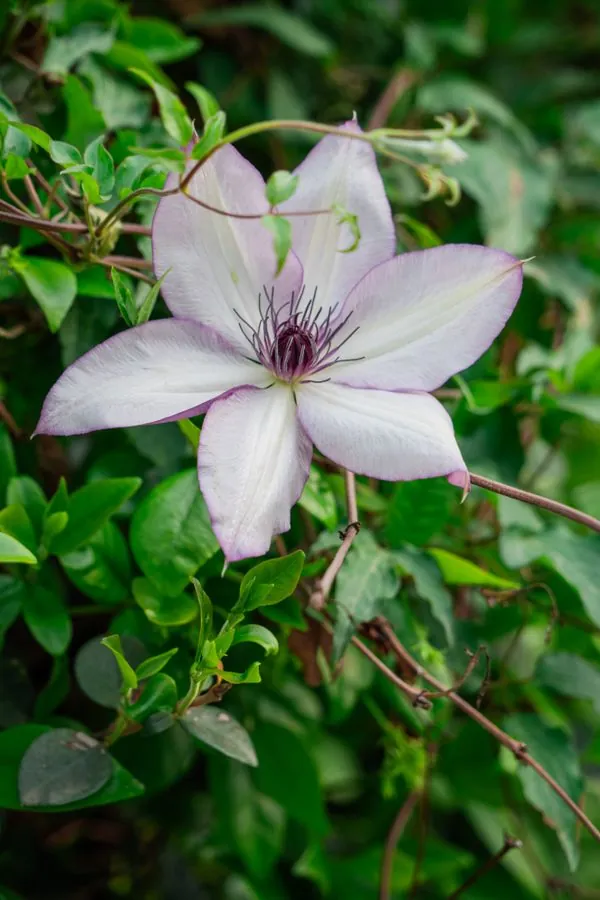
The classic for a reason. A fan trellis spreads outward like a hand, so one plant covers a wide patch of fence. Fix it two to three inches off the boards with spacer blocks. Try the midseason ‘Nelly Moser’ here: pale pink striped flowers on stems reaching eight to ten feet, blooming May to June and again in fall.
2. Cedar Batten Grid You Can Build in an Afternoon
Screw one-by-two cedar battens into a rectangle with five-inch spacing and you have a custom panel that costs less than dinner. Stain or paint it before planting, because squeezing a brush past tender stems later is miserable. Cedar holds up five to seven years untreated, longer with exterior stain.
3. Galvanized Wire Mesh Panel
Not glamorous, but clematis loves it. A two-by-four-foot welded wire panel gives the plant dozens of gripping points and costs very little. The dark-coated versions nearly disappear once the vine fills in.
4. Black Metal Obelisk in a Deep Pot
The answer for patios, and it looks expensive. Choose a pot at least eighteen inches deep (shallow pots dry out and cook roots), a five to six-foot metal obelisk, and a compact variety like the six-foot ‘Arabella’. Tie the first stems in a spiral with soft ties and the plant takes the hint. Group it with other seasonal containers the way our fall planter ideas suggest, and one pot becomes a whole display.
5. Wire Tension System on a Bare Wall
For a garage wall or the plain side of the house, nothing beats a clean wire run. Screw vine eyes into the wall every eighteen inches in horizontal rows, string galvanized wire through them, and keep the system four to six inches off the surface. Start the first row low, around twelve inches off the ground.
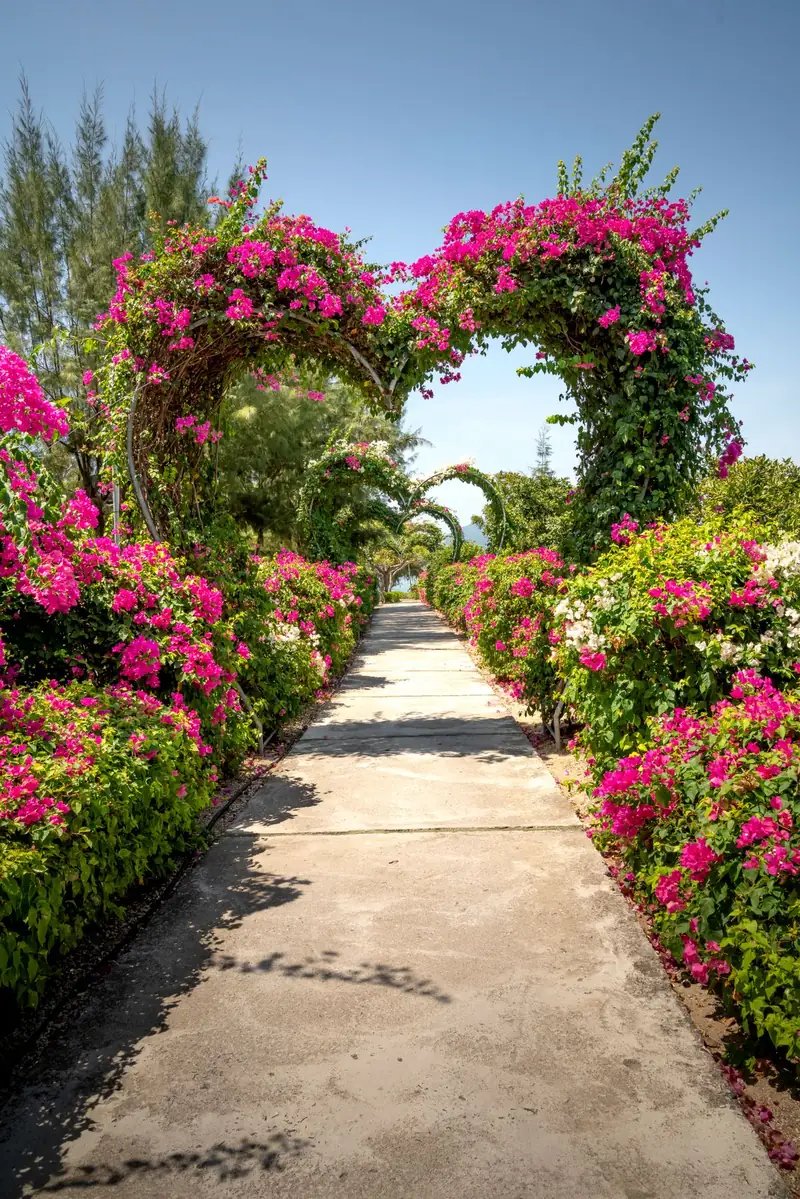
6. Wooden Arch Over a Path
A flat support gives you flowers on a surface; an arch gives you flowers overhead. Build or buy one seven to eight feet tall and at least four feet wide so people pass without brushing wet leaves, and anchor the feet well.
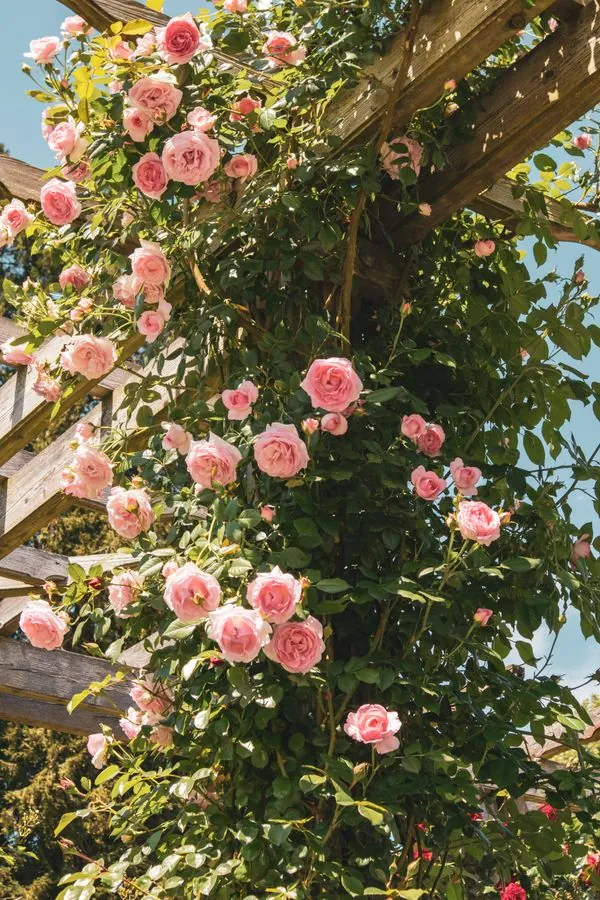
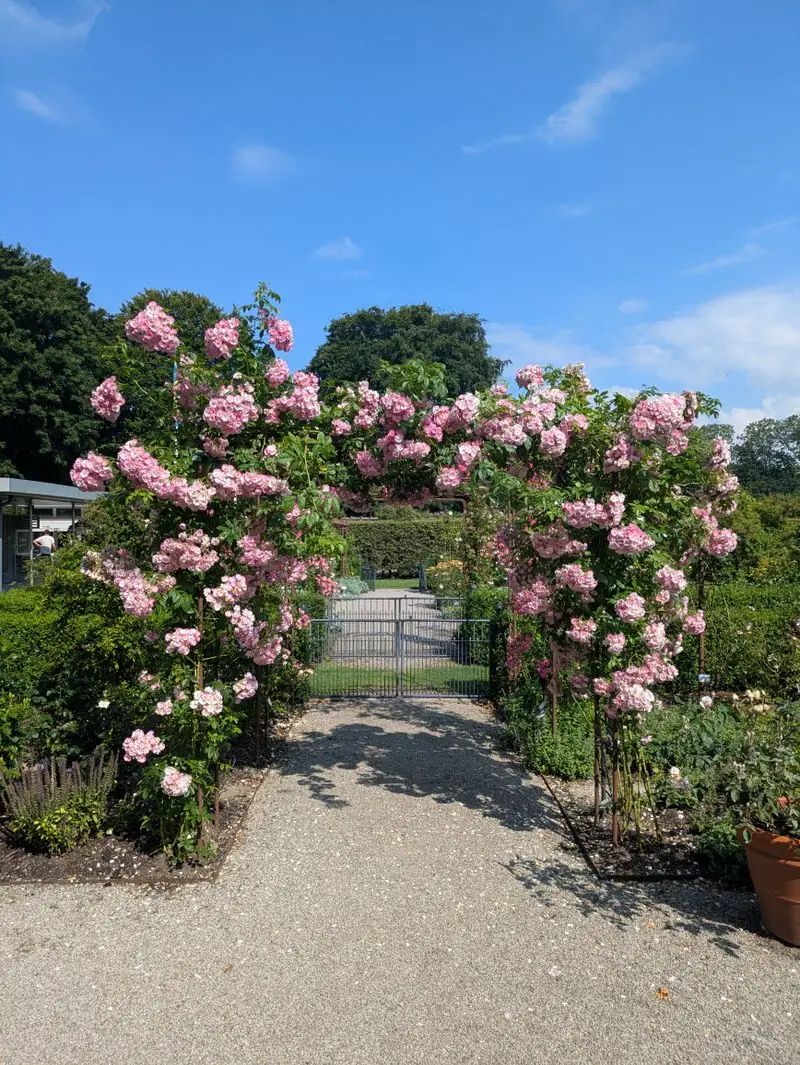
7. Clematis and Roses Sharing One Arch
The pairing everyone photographs, and it works if you plan it. Plant the clematis about eighteen inches from the rose, not in the same hole, so the roots do not fight over water. Choose a Group 3 clematis like ‘Jackmanii’ (deep purple, ten to twelve feet) or ‘Ernest Markham’ (red, eight to ten feet) with a repeat-flowering rose.
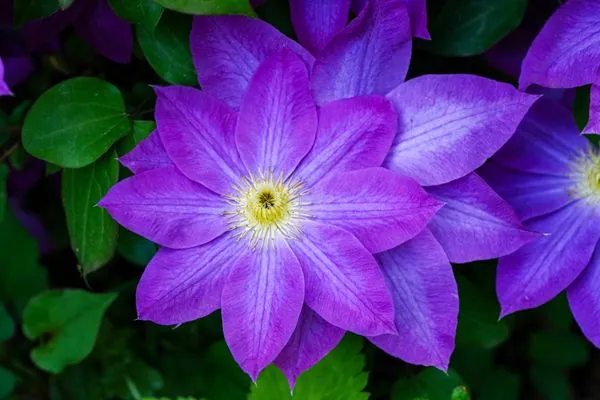
8. Corner Trellis for Awkward Spots
Every garden has a corner where two fences meet and nothing looks intentional. A tall, narrow trellis set into the corner, planted with one strong clematis and flanked by low perennials, turns the awkward spot into a destination. Small storybook touches work beautifully here: our fairy garden ideas are full of tricks for making odd corners feel magical.
9. Porch Post Lattice Wrap
A square lattice sleeve around a porch post takes an afternoon and looks professional. Keep the lattice an inch off the post so stems can wrap through, and pick a variety that suits your light: ‘Comtesse de Bouchaud’ (mauve pink, six to eight feet) handles partial shade well. Tie in loose growth weekly in the season.
10. Balcony Trough with a Mini Trellis
Renters and balcony gardeners can grow clematis too. Use a heavy trough planter (light pots become kites in wind), a two-foot mini trellis fixed firmly at the back, and a compact variety like ‘Piilu’ that stays three to five feet. A small balcony repays the same layering instinct that makes fall hanging baskets work: flowers at several heights.
11. Freestanding Divider Screen
A three-panel trellis screen can hide a compost bin, a utility meter, or the neighbor’s shed, and gives you a long ribbon of flowers without touching any fence. ‘Sweet Autumn’ clematis, which smothers itself in fragrant white stars in September, makes a divider that earns its keep late in the season.
12. Pergola Post Climber
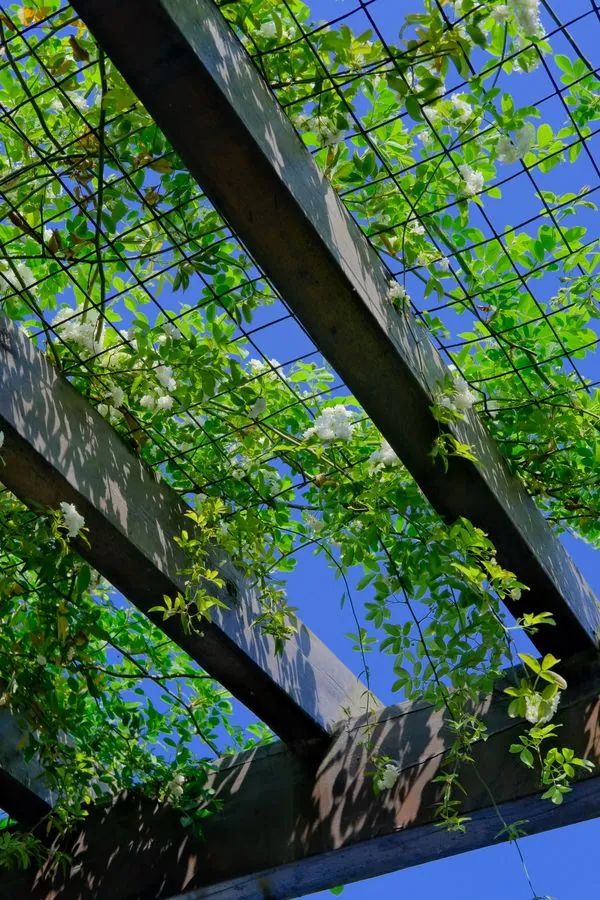
Pergolas often end up as bare timber skeletons. One clematis per post, trained up and then across the top beams, turns the structure into a flowering ceiling. Vigorous Group 3 varieties like ‘Polish Spirit’ (purple, ten to twelve feet, June to September) have the energy for it. Plant a foot out from the post base so rain reaches the roots.
13. Gate-Side Frame
A narrow trellis panel on each side of a garden gate frames the entrance like a picture frame. White ‘Henryi’ or pale ‘Guernsey Cream’ against dark-painted gate posts is a combination that photographs itself.
14. Tower Obelisk in a Mixed Border
Not every trellis needs a wall. A tall metal tower set among perennials gives the border a vertical exclamation point and lets clematis flower where the border is usually flat. The surrounding planting shades the clematis roots, solving the classic complaint of hot roots and cool tops. ‘Ville de Lyon’ (red, ten feet) rising out of catmint and salvia is hard to beat.
15. Window-Side Wire Grid
Framing a window with clematis is lovely, but the goal is a frame, not a curtain. Mount a wire grid on the wall beside the window, never across it, and guide stems around the opening. Pale flowers read best against brick, deep purples against cream render.
Planting and Training Tips That Pay Off in Year One
Dig the hole twice as wide as the pot and plant the clematis two to three inches deeper than it sat in the nursery pot, so buried buds can sprout if wilt ever strikes. Angle the rootball slightly toward the trellis so young stems lean into their support. Mulch two inches deep with bark or compost, keeping it a few inches back from the stems. Soggy crowns rot; cool, shaded roots thrive.
Training starts the week you plant. Spread young stems across the trellis in a fan or spiral with loose soft ties. Spread it wide in year one and it flowers across the whole support by year three.
Pruning by Group: The Only Chart You Need
Clematis pruning terrifies people, but it is really three simple groups. Check the plant label before you buy, because the group decides when you cut.
Group 1 flowers on last year’s wood in spring and needs no regular pruning. The Montana and evergreen types live here. Just tidy dead wood after flowering. Cutting them hard in winter removes the coming spring’s flowers, so leave them alone.
Group 2 gives a big spring flush on old wood and a smaller repeat on new growth: the large-flowered doubles and bicolors like ‘Nelly Moser’ and ‘Piilu’. In late winter, cut back to the strongest pair of healthy buds and remove dead or tangled growth.
Group 3 flowers on new growth from summer into fall and wants the hardest prune of all. Every March, cut every stem to nine to twelve inches above the ground, just above a healthy pair of buds. It feels brutal the first time. By July the plant is six feet tall and covered in flowers. ‘Jackmanii’, ‘Polish Spirit’, and ‘Ernest Markham’ are all Group 3.
Clematis Trellis FAQs
What is the best trellis for clematis?
Any support with narrow gripping points works: wire mesh panels, batten grids with four to six-inch spacing, metal obelisks, or tensioned wires. The best trellis is sized for the mature plant, held off the wall for airflow, and strong enough to carry a wet, mature vine.
How tall should a clematis trellis be?
Match the trellis to the variety. Compact types under six feet do well on four to five-foot obelisks, while vigorous Group 3 varieties reaching ten to twelve feet need a full fence run, arch, or pergola. When in doubt, go bigger: a trellis that is too small is the most common regret.
Can clematis grow in a pot on a trellis?
Yes, with a deep pot (eighteen inches or more), a sturdy obelisk or mini trellis, and a compact variety. Water often, because pots dry out far faster than garden soil, and feed monthly in the season since the plant cannot reach for nutrients the way it does in the ground.
Will clematis damage my fence or wall?
No. Clematis does not cling, bore, or grip with adhesive pads, so it will not pull paint off or crack masonry. The only real risk is a heavy mature vine toppling a flimsy trellis, fixed by anchoring the support properly in the first place.
The Garden Will Thank You
A clematis trellis is one of those rare garden projects where a single weekend of work pays off for a decade. Pick a support the plant can actually grip, give it room to breathe, plant it deep, and prune it by the group. The rest is patience. Give it a season and the clematis will do the rest.